
Table of Contents
ToggleSmartphone use among students
Introduction
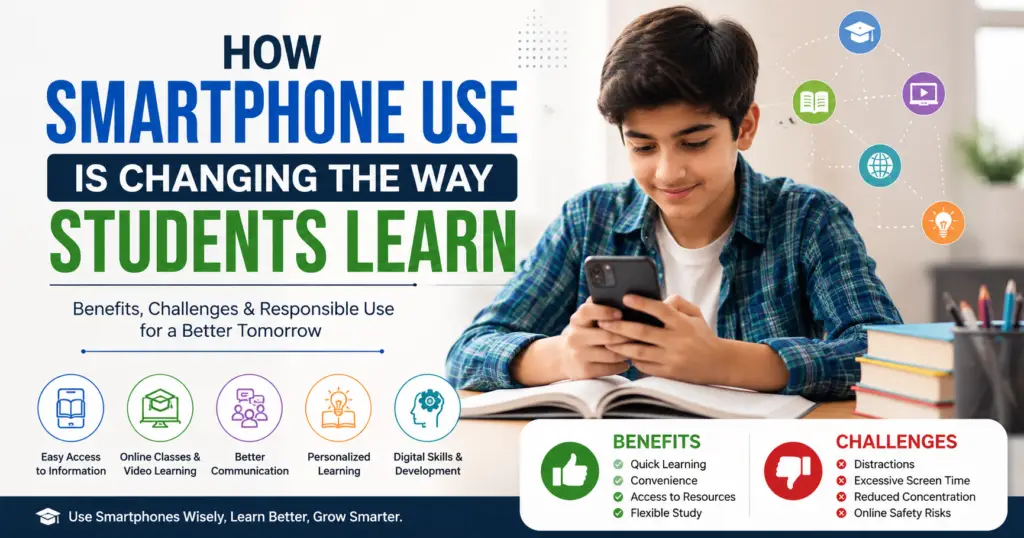
In today’s digital world, smartphones have become an important part of students’ daily lives. What was once mainly a device for communication and entertainment is now also being used as a powerful learning tool. Students can search for information, attend online classes, watch educational videos, read e-books, use learning apps, complete assignments, and communicate with teachers and classmates—all from a smartphone.
Smartphone use is changing the way students learn by making education more accessible, flexible, and interactive. A student no longer has to depend entirely on a classroom or printed textbook to understand a subject. With just a few taps, learning resources are available anytime and almost anywhere.
However, smartphones also have a negative side. Social media, games, entertainment, notifications, excessive screen time, and other distractions can affect students’ concentration and study habits. Therefore, smartphones can be both a valuable educational tool and a potential source of distraction.
This article explores how smartphone use is changing the way students learn, including its major benefits, disadvantages, effects on academic performance, and practical ways students can use smartphones responsibly for better learning.
How Smartphone Use Is Changing the Way Students Learn
How Smartphone Use Is Changing the Way Students Learn
Smartphones have become an important part of everyday life, especially for students. From searching for information and attending online classes to watching educational videos and using learning apps, smartphones have changed the traditional way students study. Today, learning is no longer limited to classrooms, textbooks, and notebooks.
However, smartphone use among students has both advantages and disadvantages. When used responsibly, smartphones can make education easier, faster, and more interactive. On the other hand, excessive smartphone use can cause distraction, reduce concentration, and affect students’ academic performance and daily habits.
Easy Access to Information
One of the biggest advantages of smartphones in education is easy access to information. Students can search for information within seconds using search engines, online libraries, educational websites, and digital books.
Instead of depending only on printed textbooks, students can explore different explanations and learning resources whenever they need them.
However, there is also a disadvantage. Not every website provides accurate information. Students may sometimes depend on unreliable sources or copy information without properly understanding it.
Educational Apps and Mobile Learning
Educational apps have made learning more convenient. Students can use applications to learn languages, mathematics, science, general knowledge, and many other subjects.
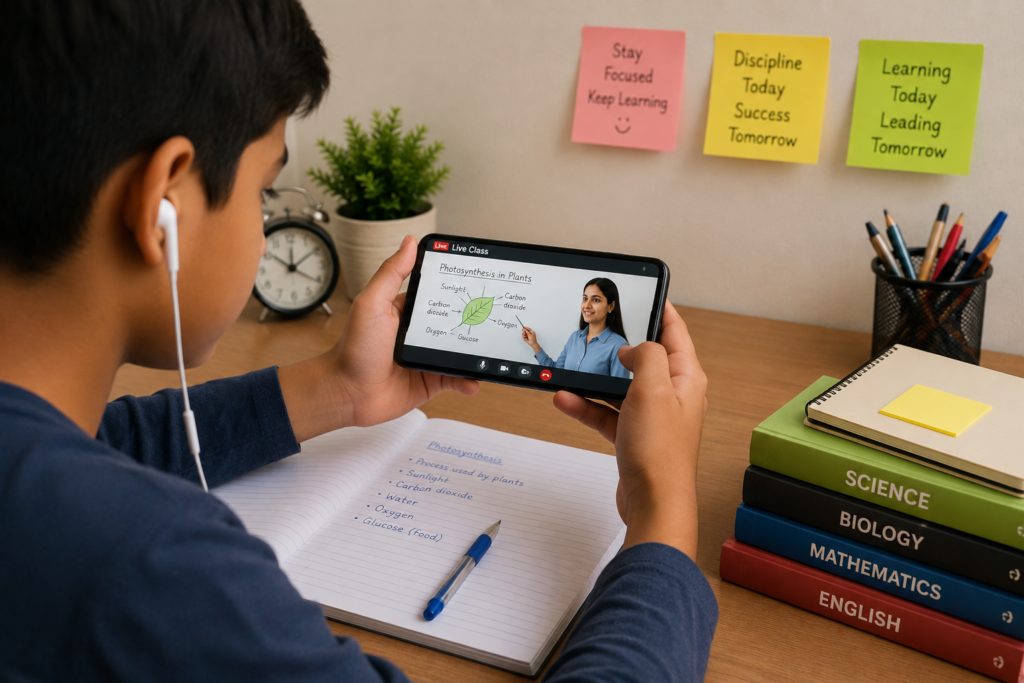
Mobile learning also allows students to study outside the classroom. They can revise lessons while travelling, at home, or during free time.
But students should not become completely dependent on educational apps. Learning requires thinking, writing, practicing, and solving problems independently.
Online Classes and Educational Videos
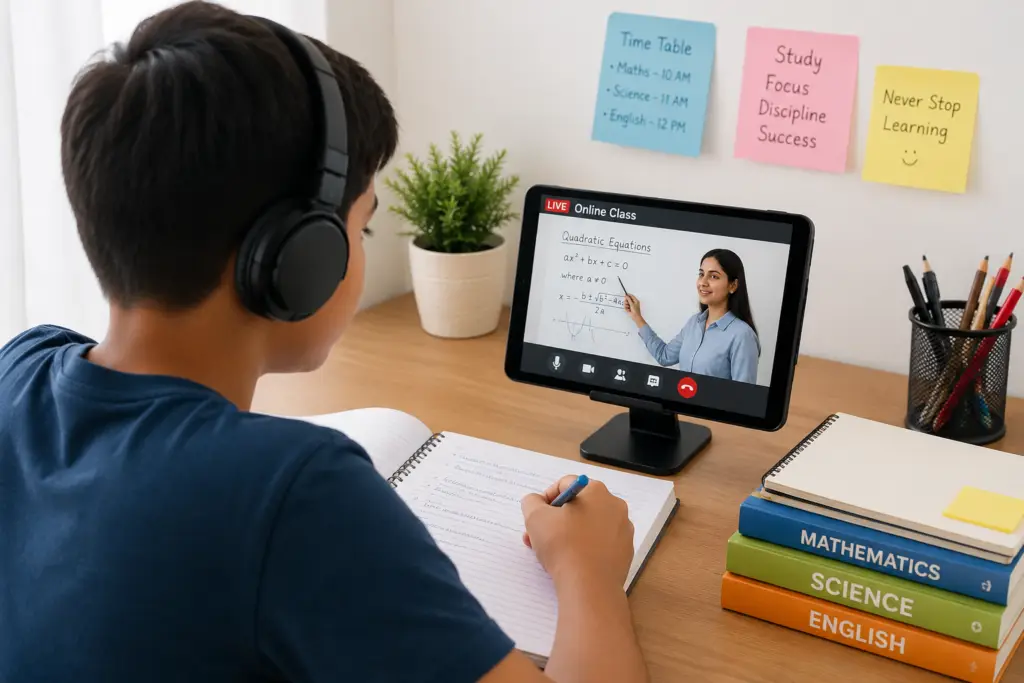
Smartphones provide students with access to online classes and educational videos. Platforms such as video-learning websites can help students understand difficult topics through demonstrations, animations, and explanations.
If a student does not understand something during a classroom lesson, they can watch another explanation online and learn at their own pace.
The disadvantage is that smartphones can encourage excessive screen time. Students may start watching entertainment videos, short-form content, or social media instead of educational material.
Better Communication Between Students and Teachers
Smartphones have also improved communication in education. Students can communicate with teachers, receive assignments, share notes, and participate in study groups through messaging and educational platforms.
This makes it easier to stay connected outside the classroom.
However, constant notifications and messages can become distracting. Students may intend to check one educational message but end up spending a long time on social media or other apps.
Personalized Learning
Every student learns differently. Some students understand a topic quickly, while others need additional explanations and practice.
Smartphones allow students to choose learning materials according to their own needs. They can pause videos, repeat lessons, take online quizzes, and practice difficult subjects whenever necessary.
At the same time, having unlimited learning choices can sometimes make students lose focus. Good time management and self-discipline are therefore important
Advantages of Smartphones in Education
Smartphones can provide several benefits when they are used properly:
- Quick access to educational information
- Online learning opportunities
- Educational apps and digital resources
- Easy communication with teachers and classmates
- Flexible and personalised learning
- Access to e-books and digital notes
- Development of digital skills
- Opportunities for research and creativity
https://www.youtube.com/live/fzZ6_FwVbJc?si=wR73ulFpf38Yk94dThese benefits show why smartphones can be valuable educational tools.
Disadvantages of Smartphone Use Among Students
Everything has two sides, and smartphones are no exception. Excessive or irresponsible smartphone use can create several problems.
- Distraction
Social media notifications, games, entertainment, and messaging can easily distract students from their studies.
- Reduced Concentration
Constantly switching between apps and notifications may make it difficult for students to concentrate on one task for a long period.
- Excessive Screen Time
Spending many hours looking at a smartphone can reduce time available for physical activity, outdoor activities, reading, and face-to-face communication.
- Dependence on Technology
Students may become overly dependent on smartphones for answers instead of developing independent thinking and problem-solving abilities.
- Sleep Problems
Using smartphones late at night can interfere with healthy sleeping habits, particularly when students spend long periods watching videos or using social media before bedtime.
- Social Media and Gaming
Entertainment apps can become more attractive than educational activities. If students cannot control their usage, their study time may be significantly reduced.
- Online Safety Concerns
Students may face risks such as cyberbullying, inappropriate content, scams, and privacy problems if they are not taught how to use the internet safely
How Smartphones Can Affect Academic Performance
The effect of smartphones on academic performance depends largely on how they are used.
A student who uses a smartphone to research a topic, attend an online lesson, practice questions, and communicate with teachers may benefit from it. In contrast, a student who spends several hours on social media and games may have less time and concentration for studying.
Therefore, the smartphone itself is not necessarily the problem; irresponsible use can be the problem
How Students Can Use Smartphones Responsibly
Students can make smartphones useful for education by following a few simple habits:
- Set a daily study schedule.
- Turn off unnecessary notifications while studying.
- Use educational apps and trusted websites.
- Limit social media and gaming during study hours.
- Take regular breaks from the screen.
- Avoid unnecessary smartphone use before sleeping.
- Do not copy answers without understanding them.
- Balance digital learning with books, writing, exercise, and outdoor activities.
Role of Parents and Teachers
Parents and teachers have an important role in helping students develop healthy smartphone habits. Completely preventing students from using technology may not always be practical because digital skills are increasingly important.
Instead, students should be taught how to use technology responsibly. Parents and teachers can encourage educational use, establish reasonable limits, and teach students about online safety and digital responsibility
The Future of Smartphone-Based Learning
Technology will continue to influence education. Smartphones, artificial intelligence, online courses, digital classrooms, and educational applications are likely to become increasingly common.
The challenge will be finding the right balance between technology and traditional learning. Students still need reading, writing, critical thinking, physical activity, communication, and real-world experiences.
Conclusion
Smartphone use is changing the way students learn by providing quick access to information, educational apps, online classes, digital resources, and flexible learning opportunities. These advantages can make education more convenient and interactive.
However, smartphones also have a negative side. Distraction, excessive screen time, social media, gaming, reduced concentration, and dependence on technology can affect students’ learning and daily lives.
The best approach is not to completely avoid smartphones but to use them wisely and responsibly. When students learn to balance smartphone use with traditional study methods, exercise, social interaction, and healthy habits, technology can become a powerful tool for education rather than a source of distraction.